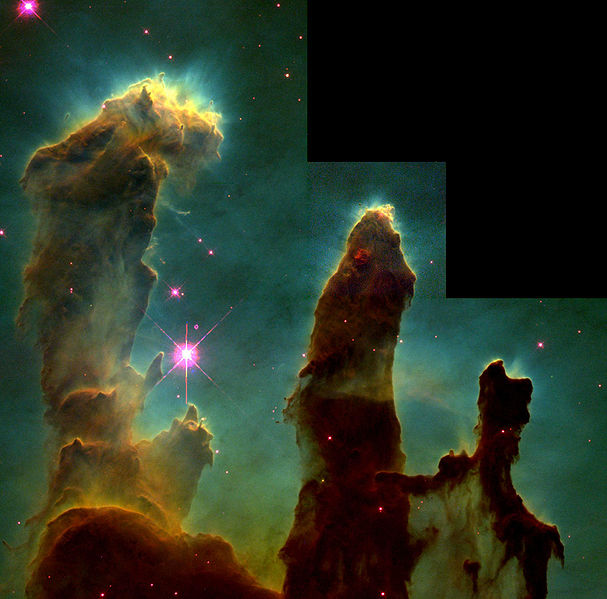
Stellar Birth (Eagle Nebula)
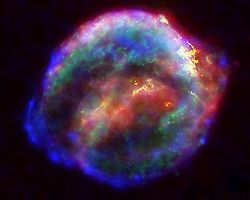
Stellar Death (Remnant of 1604 Supernova)
This is the web page from the last time I taught this course, an a syllabus from the last time it was taught in the summer. The Summer 2024 course will be very similar and this web page and syllabus will be updated once we know that the enrollment is enough for the course to be offered. For now only lecture 1 is posted below, and it will also be updated as will the rest of the lectures and assignments closer to the start of the summer term. Provides general education credit (Origins and Influences Pathway).
The course is an introduction to astronomical science extending from historical astronomy through the most recent discoveries of astrophysics including stellar evolution, supernovas, white dwarves, neutron stars, black holes, dark matter and energy, exoplanets, and the Big Bang. The course will also cover techniques used by astronomers and some of the latest conjectures such as extra dimensions or multiple universes, and the conditions that allowed life to form and develop.
|
|
Stellar Birth (Eagle Nebula) |
Stellar Death (Remnant of 1604 Supernova) |